Course Details
| Duration | 30 scheduled hours |
|---|---|
| Sessions | 15 sessions × 2 hours (1 hour 45 minutes of instruction and practice, plus a 15-minute break) |
| Delivery Mode | In-Person |
| Course Type | Short Course / Practical |
| Credential | NorthBridge Academy Certificate of Completion |
About This Course
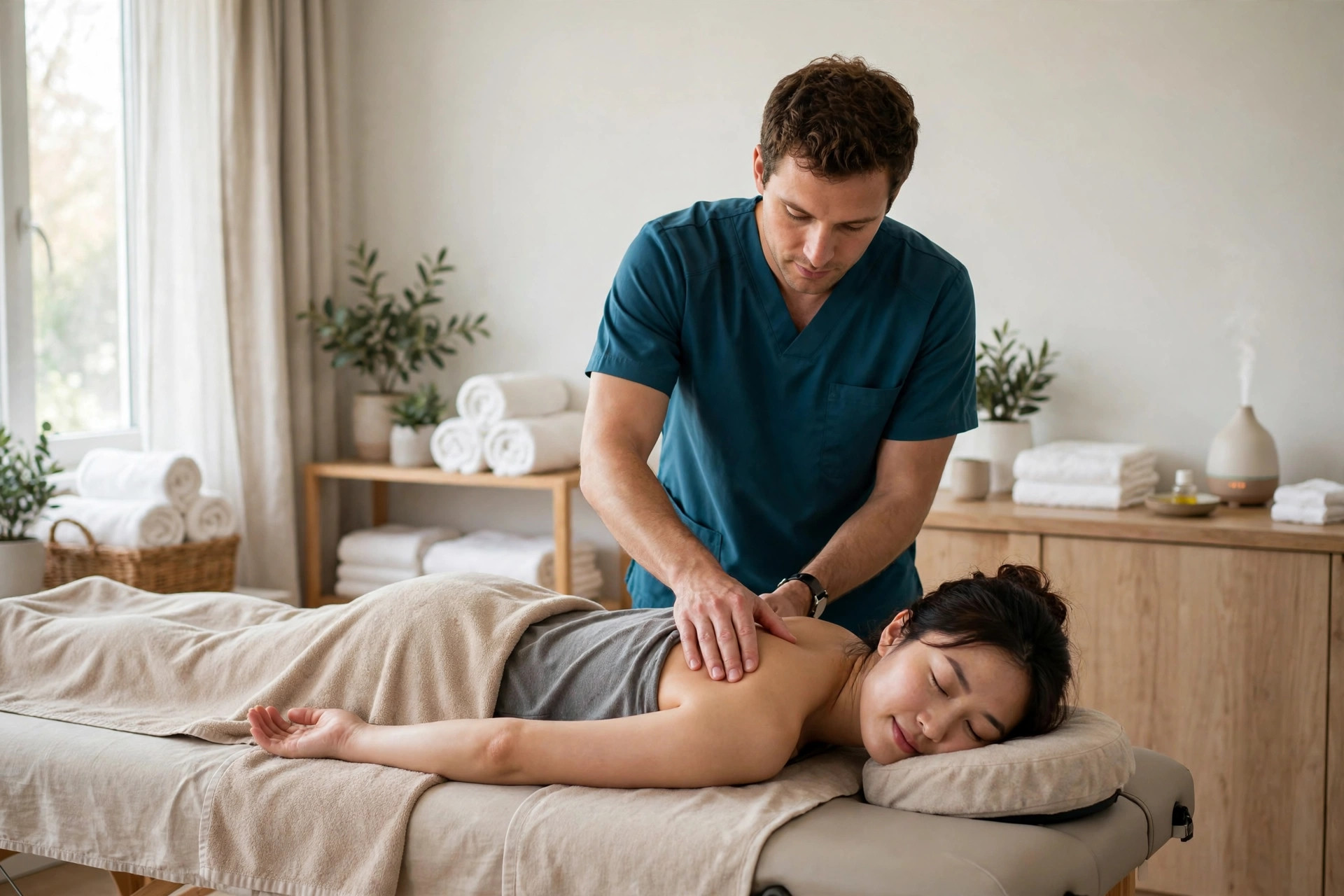
This introductory wellness course provides non-clinical foundations in client service, hygiene, body mechanics, relaxation-focused touch principles, contraindication awareness, consent, draping, documentation, and professional boundaries. Practical activities are limited to supervised, non-therapeutic wellness simulations. The program does not qualify participants as Registered Massage Therapists and does not authorize assessment, diagnosis, treatment, or representation as a regulated health professional.
Learning Objectives
Target Audience
Delivery & Assessment
Delivery and learning methods: Instructor-led presentations, guided discussion, demonstrations, case studies, individual and group exercises, role-play or simulations, applied assignments, structured feedback, and a final practical or integrative activity appropriate to the subject area.
Assessment: Knowledge and safety checks 25%; participation and technique practice 30%; intake/documentation exercise 15%; final supervised wellness simulation 30%.
Certificate requirements: Minimum 80% attendance, completion of required learning activities and assessments, and a minimum overall grade of 70%. The certificate identifies the course title and scheduled duration and does not represent a licence, regulated credential, diploma, or guarantee of employment.
Required materials and technology: Comfortable clothing, linens or towels as instructed, personal hygiene supplies, notebook, and instructor-approved practice materials.
Course Outline
Differences between spa wellness services and regulated massage therapy, protected titles, advertising boundaries, and further education.
Learning objectives: Explain scope differences; recognize protected representations; identify further-training pathways.
Informed consent, client choice, appropriate touch, privacy, boundaries, refusal of service, and complaint prevention.
Learning objectives: Obtain consent; maintain boundaries; identify inappropriate requests.
Hand hygiene, linens, surfaces, product handling, cleaning schedules, and preventing cross-contamination.
Learning objectives: Apply hygiene procedures; organize clean and used materials; reduce contamination risks.
Posture, stance, weight transfer, table height, hand and wrist protection, pacing, and fatigue management.
Learning objectives: Use safe body mechanics; adjust workspace; reduce repetitive-strain risks.
Major body regions, superficial muscle groups, joints, sensitive areas, and limits of non-clinical anatomical discussion.
Learning objectives: Identify major body regions; recognize sensitive areas; avoid clinical claims.
Non-medical intake, goals for relaxation, preferences, allergies, medications as a referral flag, and documenting consent.
Learning objectives: Conduct a basic intake; identify referral questions; document preferences accurately.
Fever, infection, acute injury, skin conditions, pregnancy considerations, unexplained pain, and when to postpone or refer.
Learning objectives: Recognize common contraindications; refuse unsafe service; refer to qualified professionals.
Privacy, secure draping, positioning supports, temperature, communication, and accessible setup.
Learning objectives: Maintain privacy; position clients safely; monitor comfort.
Supervised practice of broad, non-deep, non-clinical movements, pacing, pressure communication, and avoiding vulnerable areas.
Learning objectives: Demonstrate introductory techniques; communicate pressure; maintain safe limits.
Sequencing a short relaxation service, transitions, rhythm, product use, and hygiene during practice.
Learning objectives: Sequence a basic service; maintain continuity; use products safely.
Ergonomic setup, brief seated services, clothing-on techniques, event settings, and consent.
Learning objectives: Set up a chair-based service; maintain boundaries; adapt to public settings.
Welcoming clients, trauma-aware communication, cultural humility, accessibility, and handling dissatisfaction.
Learning objectives: Communicate inclusively; respond to concerns; maintain client dignity.
Service notes, consent records, scheduling, cancellation policies, receipts, privacy, and secure storage.
Learning objectives: Complete basic records; protect client information; explain service policies.
Spa roles, supervision, liability insurance awareness, municipal requirements, marketing claims, and further credentials.
Learning objectives: Identify employment pathways; recognize insurance needs; avoid misleading claims.
Complete intake, consent, setup, short relaxation sequence, after-service communication, cleaning, and self-evaluation.
Learning objectives: Integrate safe service steps; demonstrate professionalism; develop an improvement plan.
Scope & Limitations
Non-clinical and introductory only. Graduates must not use the title RMT, diagnose or treat conditions, or provide services outside applicable law and insurance requirements.
Course dates will be announced soon. To pre-register your interest in Massage Therapy Basics or to ask about upcoming sessions, contact the academy — we would love to hear from you.